
Protein Molecular Weight Markers

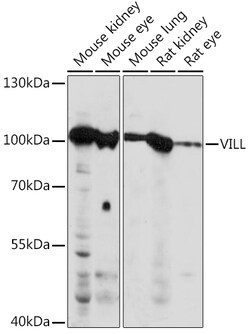
ABclonal Technology VILL Rabbit pAb

The protein encoded by this gene belongs to the villin/gelsolin family. It contains 6 gelsolin-like repeats and a headpiece domain. It may play a role in actin-bundling.

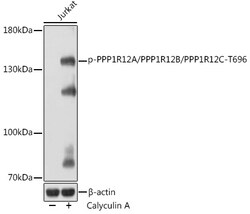
ABclonal Technology Phospho-PPP1R12A/PPP1R12B/PPP1R12C-T696 Rabbit pAb
Myosin phosphatase target subunit 1 (MBS) is a subunit of myosin phosphatase, which regulates actin-myosin interactions via Rho, a small GTPase. RhoA, in its GTP-bound form, interacts with MBS to control myosin light chain (MLC) phosphorylation, affecting smooth muscle contraction and nonmuscle cell function. Rho-kinase, activated by GTP-RhoA, phosphorylates MBS, inhibiting myosin phosphatase. Overexpression or activation of RhoA increases MBS and MLC phosphorylation. MBS plays a critical role in modulating actin-myosin interactions and is regulated by RhoA signaling. Several isoforms of this gene arise from alternative splicing.
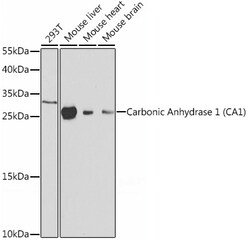
ABclonal Technology Carbonic Anhydrase 1 (CA1) Rabbit pAb
Carbonic anhydrases (CAs) are a large family of zinc metalloenzymes that catalyze the reversible hydration of carbon dioxide. They participate in a variety of biological processes, including respiration, calcification, acid-base balance, bone resorption, and the formation of aqueous humor, cerebrospinal fluid, saliva and gastric acid. They show extensive diversity in tissue distribution and in their subcellular localization. This CA1 gene is closely linked to the CA2 and CA3 genes on chromosome 8. It encodes a cytosolic protein that is found at the highest level in erythrocytes. Allelic variants of this gene have been described in some populations. Alternative splicing and the use of alternative promoters results in multiple transcript variants.
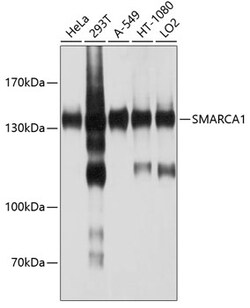
ABclonal Technology SMARCA1 Rabbit pAb
This gene encodes a member of the SWI/SNF family of proteins. The encoded protein is an ATPase which is expressed in diverse tissues and contributes to the chromatin remodeling complex that is involved in transcription. The protein may also play a role in DNA damage, growth inhibition and apoptosis of cancer cells. Alternative splicing results in multiple transcript variants.
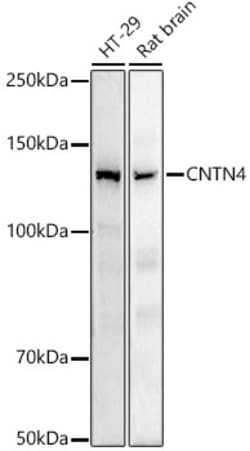
ABclonal Technology CNTN4 Rabbit mAb
This gene encodes a member of the contactin family of immunoglobulins. Contactins are axon-associated cell adhesion molecules that function in neuronal network formation and plasticity. The encoded protein is a glycosylphosphatidylinositol-anchored neuronal membrane protein that may play a role in the formation of axon connections in the developing nervous system. Deletion or mutation of this gene may play a role in 3p deletion syndrome and autism spectrum disorders. Alternative splicing results in multiple transcript variants.
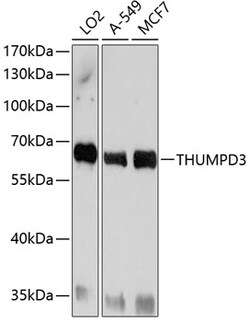
ABclonal Technology THUMPD3 Rabbit pAb
Predicted to enable tRNA (guanine) methyltransferase activity. Predicted to be involved in tRNA methylation. Located in cytosol and nucleolus.
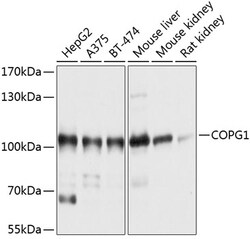
ABclonal Technology COPG1 Rabbit pAb
Predicted to enable structural molecule activity. Predicted to be involved in several processes, including Golgi vesicle transport, establishment of Golgi localization, and organelle transport along microtubule. Located in Golgi apparatus.
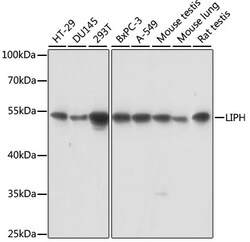
ABclonal Technology LIPH Rabbit pAb
This gene encodes a membrane-bound member of the mammalian triglyceride lipase family. It catalyzes the production of 2-acyl lysophosphatidic acid (LPA), which is a lipid mediator with diverse biological properties that include platelet aggregation, smooth muscle contraction, and stimulation of cell proliferation and motility.
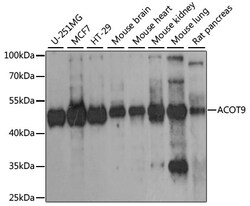
ABclonal Technology ACOT9 Rabbit pAb
The protein encoded by this gene is a mitochondrial acyl-CoA thioesterase of unknown function. Two transcript variants encoding different isoforms have been found for this gene.
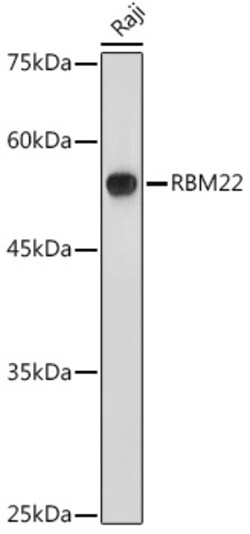
ABclonal Technology RBM22 Rabbit pAb
This gene encodes an RNA binding protein. The encoded protein may play a role in cell division and may be involved in pre-mRNA splicing. Related pseudogenes exist on chromosomes 6, 7, 9, 13, 16, 18, and X.
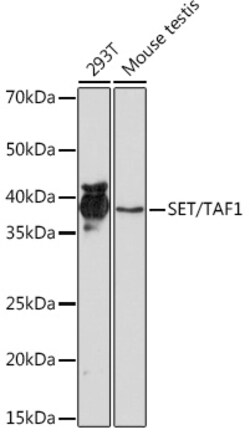
ABclonal Technology SET/TAF1 Rabbit mAb
The protein encoded by this gene inhibits acetylation of nucleosomes, especially histone H4, by histone acetylases (HAT). This inhibition is most likely accomplished by masking histone lysines from being acetylated, and the consequence is to silence HAT-dependent transcription. The encoded protein is part of a complex localized to the endoplasmic reticulum but is found in the nucleus and inhibits apoptosis following attack by cytotoxic T lymphocytes. This protein can also enhance DNA replication of the adenovirus genome. Several transcript variants encoding different isoforms have been found for this gene.
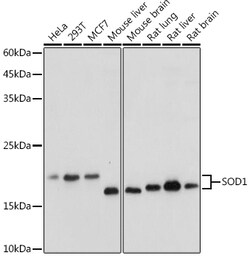
ABclonal Technology SOD1 Rabbit pAb
The protein encoded by this gene binds copper and zinc ions and is one of two isozymes responsible for destroying free superoxide radicals in the body. The encoded isozyme is a soluble cytoplasmic protein, acting as a homodimer to convert naturally-occuring but harmful superoxide radicals to molecular oxygen and hydrogen peroxide. The other isozyme is a mitochondrial protein. In addition, this protein contains an antimicrobial peptide that displays antibacterial, antifungal, and anti-MRSA activity against E. coli, E. faecalis, S. aureus, S. aureus MRSA LPV+, S. agalactiae, and yeast C. krusei. Mutations in this gene have been implicated as causes of familial amyotrophic lateral sclerosis. Rare transcript variants have been reported for this gene.
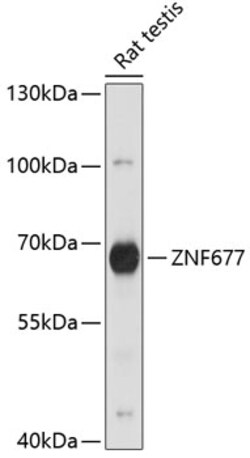
ABclonal Technology ZNF677 Rabbit pAb
Predicted to enable DNA-binding transcription factor activity, RNA polymerase II-specific and RNA polymerase II cis-regulatory region sequence-specific DNA binding activity. Predicted to be involved in regulation of transcription by RNA polymerase II. Predicted to be active in nucleus.
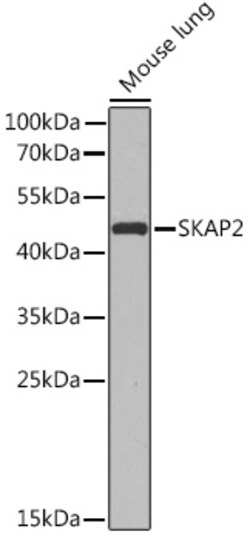
ABclonal Technology SKAP2 Rabbit pAb
The protein encoded by this gene shares homology with Src kinase-associated phosphoprotein 1, and is a substrate of Src family kinases. It is an adaptor protein that is thought to play an essential role in the Src signaling pathway, and in regulating proper activation of the immune system. This protein contains an amino terminal coiled-coil domain for self-dimerization, a plecskstrin homology (PH) domain required for interactions with lipids at the membrane, and a Src homology (SH3) domain at the carboxy terminus. Some reports indicate that this protein inhibits actin polymerization through interactions with actin assembly factors, and might negatively regulate the invasiveness of tumors by modulating actin assembly. Alternative splicing results in multiple transcript variants encoding different isoforms.
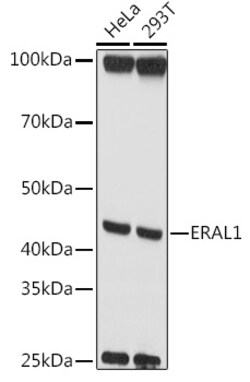
ABclonal Technology ERAL1 Rabbit pAb
The protein encoded by this gene is a GTPase that localizes to the mitochondrion. The encoded protein binds to the 3 terminal stem loop of 12S mitochondrial rRNA and is required for proper assembly of the 28S small mitochondrial ribosomal subunit. Deletion of this gene has been shown to cause mitochondrial dysfunction, growth retardation, and apoptosis. Several transcript variants encoding different isoforms have been found for this gene.